Que transmettre: aux apprentis, aux compagnons, aux maîtres?
Jean-marie Baudoux
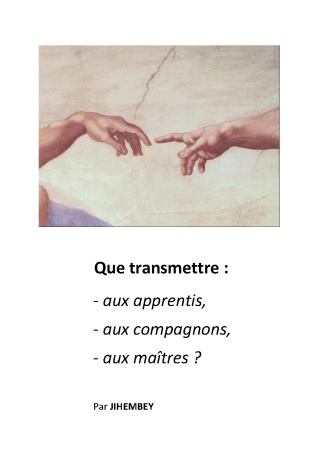
L'auteur se penche sur la transmission qui doit être faite quant aux valeurs de la franc-maçonnerie.
-
Prix
9,43 €
-
Date d'expédition estimée
Dans 3 jours
Quantity discounts:
| Quantité | Remise | Price per book |
|---|---|---|
| 25+ | 1% | 9,34 € |
| 50+ | 2% | 9,24 € |
| 100+ | 3% | 9,15 € |
| 250+ | 5% | 8,96 € |
-

Après deux ouvrages antérieurs, l’un, répondant au besoin de faire connaître son parcours maçonnique, l’autre, posant la question de savoir pourquoi en ce XXIe siècle, des hommes et des femmes ont encore le désir de rejoindre la franc-maçonnerie, l’auteur, de son nom de plume, JIHEMBEY, a ressenti le désir de se pencher sur la transmission des valeurs maçonniques au sein d’une Tradition ancienne. Il nourrit donc l’espérance que cet opus provoquera, chez tous ceux qui le liront, une prise conscience ; celle d’être un transmetteur à part entière.
Voir le profil de Jean-marie Baudoux Voir les autres livres de Jean-marie Baudoux -
EXPLANATION OF THE BOOK TITLE THOSE WHO DIED BECOME ALWAYS THE LIFE, it is only the path to happiness, is explained on three levels, namely: The help of the one who loved us before dying, the elimination of liberticide in the African societies, the ceremonial sacrifices organized after death: Tchiô kpi-kpé, zindo, avizinli, tchiô Didi, ahandoxô, adjalalassa and noussa-yiyi and the ban on wishing the curse of death on one's neighbor and their benefits obtained by the initiators . Positions of the one who loved us before dying in African societies. There is a Beninese language which says that "Min koukou non yi fidé a" the one who is dead does not go anywhere. If the person loved you when he was alive, his afterlife cannot let evil spirits dominate you. This is why people say "Oun kou houn ma do avor mi o" to neither see his corpse nor protect him with the loincloth. These problems arise when they are seriously assaulted. For example, the child who hit his father or mother deserved to be modified using this expression while the child who responds to the orders of his parents would always be saved even if one of his parents is no longer or both are deceased. 2. The elimination of liberticide in African societies. Sometimes we encounter certain difficulties in the functions or in the classes where an individual decides to kill the one who believes himself to be bigger or stronger than him or her in this environment. That is to say the one who decided to prevent everyone to dominate the territory. In this case, everyone agrees to free it thinking that they will have peace as they wish, and the problem becomes worse . This second explanation of the book invites us to have tolerance and patience because the strongest can finally become the weakest at the last minute if we focus on the main objective of our mission. 3.The ceremonial sacrifices organized after death and their benefits obtained by the initiators. Tchiô kpi-kpé: It is a ceremony organized to welcome the deceased who has been lifted from the morgue or somewhere when he wants to go where he will be buried. In this ceremony, the Assoukagan were publicly contributed by the deceased and those who cohabit with this family after singing and praying over the dead. zindo: It is a ceremony organized by the husband or wife of the deceased to prove his importance in the bereaved family. This ceremony gathers money according to behaviors that we adopted with beautiful families and friends. avizinli: It is a ceremony organized by the tam-tam to allow all the deceased to dance even if they are crying. This ritual relies on everyone's contribution. ahandoxô: It is the libation organized by the head of the family to remember the importance of those who died in this family and each individual was required to give the sheep, the rooster, the hen, liquors and money fixed. adjalalassa: It is a ceremony organized to gather the last loincloths which will accompany the death in the tomb. In this ceremony, each loincloth that is brought necessarily contains money, otherwise the individual or the deceased would risk taking their loincloth. noussa-yiyi: It is a ceremony organized to allow a child to know the supreme being who represents his/her God is one of the dead of the family when he/she was not yet born. This ceremony organized 4.The ban on wishing the curse of death on one's neighbor Happiness or unhappiness belongs to all living beings. No one takes the fate of his neighbor. If you were born to do a few things in life, you will do it despite everything that happens in your background. Once committed to wishing the curse on the one who assaulted you, the Eternal God will remain calm and say that you can manage everything without having requested his various aids. For this, you will continue to lose certain forces that help you to evolve. Under these conditions, you would wonder if it is the bewitchment that prevents you.
-
Nombre de pages 65 Langue french Type Livre imprimé en niveaux de gris Format A4 Papier Papier standard Couverture Couverture souple Reliure Dos carré collé Lamination Aucun ISBN 978-2-8083-2648-3 9782808326483 -
Le Livre en Papier, c'est aussi :
-
Paiements par carte
Le Livre en Papier vous permet de payer vos commandes par Bancontact, Visa et MasterCard, mais aussi par virement bancaire.
-
Livraison internationale
Le Livre en Papier expédie vos commandes où que vous soyez via les services Bpost.
-
Publication gratuite de vos livres !
Le Livre en Papier vous permet de publier un livre gratuitement, sans surprise ni frais cachés. Cliquez ici pour plus d'informations.
-
Paiements par carte

Vous aimerez aussi