
The Military-Security Dimension of Energy Politics in the Gulf of Guinea
Alobwede John
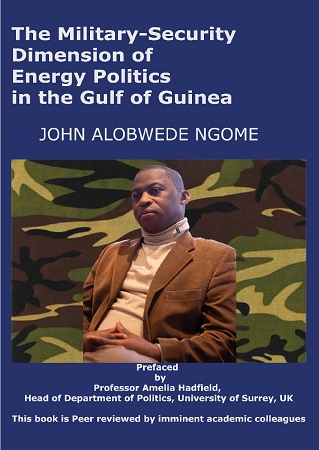
This book presents a meticulous analysis of the Military-Security Dimension of energy politics in the Gulf of Guinea. The volume makes the case that hydrocarbon endowment tends to attract diverse forms of insecurity that can imperil the stability of the states of the Gulf of Guinea, as well as the global energy chain. The book underscores that the Gulf of Guinea is indispensable for the supply of hydrocarbons to key energy partners of the Gulf of Guinea such as the United States, some EU states, China etc that import energy resources from the region, as well as the energy-producing states themselves. The study makes the case that together, these states must adopt a range of smart power options by which to contain and/or eliminate various security threats arising from both state and non-state actors.
-
Price
20,00 €
-
Estimated shipping date
3 days from now
-

John Alobwede Ngome is a Development, Geopolitical and Geostrategic Analyst, an Academic, Writer, Consultant and Associate Researcher with a multidisciplinary background. He is equally an Expert and Researcher in Energy Security, Energy Governance, Policy Analysis, Gender Issues & the economic empowerment of women, as well as Sustainable Development. He obtained a PhD in Political Science from the VUB in Brussels,
View the profile of Alobwede John -
This book presents a meticulous analysis of the Military-Security Dimension of energy politics in the Gulf of Guinea. The volume makes the case that hydrocarbon endowment tends to attract diverse forms of insecurity that can imperil the stability of the states of the Gulf of Guinea, as well as the global energy chain. The book underscores that the Gulf of Guinea is indispensable for the supply of hydrocarbons to key energy partners of the Gulf of Guinea such as the United States, some EU states, China etc that import energy resources from the region, as well as the energy-producing states themselves. The study makes the case that together, these states must adopt a range of smart power options by which to contain and/or eliminate various security threats arising from both state and non-state actors. Thus, there is a clear military-security dimension to energy politics in the Gulf of Guinea. The volume accentuates that hard security threats include pirate attacks, hostage-takings and the kidnapping of expatriate and African Actors alike in the oil/gas sectors, as well as recurrent and diverse attacks on oil tankers and oil installations, oil theft and oil bunkering, alongside the more high-profile threats posed by pro-independent militant groups in the Niger Delta Region of Nigeria, and the Bakassi Region of Cameroon that demand a blend of decisive military responses, and some measure of soft power. The book also underlines that the continuing reliance of major economies such as the United States, various European states, and emerging energy-intensive economies such as China on the Gulf of Guinea continues to produce interesting tensions between the adoption of a militaristic approach to the politics of energy security across the Gulf of Guinea by major oil-consuming countries on the one side, and attempts on the other to safeguard energy supplies in the region. This dilemma is further compounded by the region’s own areas of fragility, weaker military architecture and less robust sources of hard power.
-
Page count 99 Language french Type Book printed in grayscale Format A4 Paper Standard paper Cover Soft cover Binding Perfect binding Lamination Glossy ISBN 978-2-8083-1415-2
You may also like